Created by Magnus Nossen
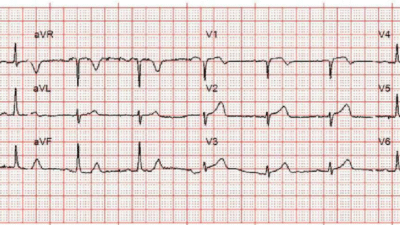
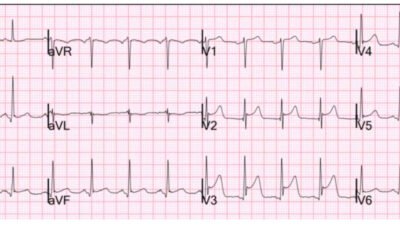
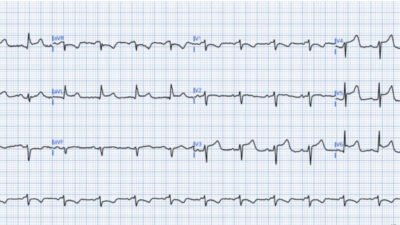
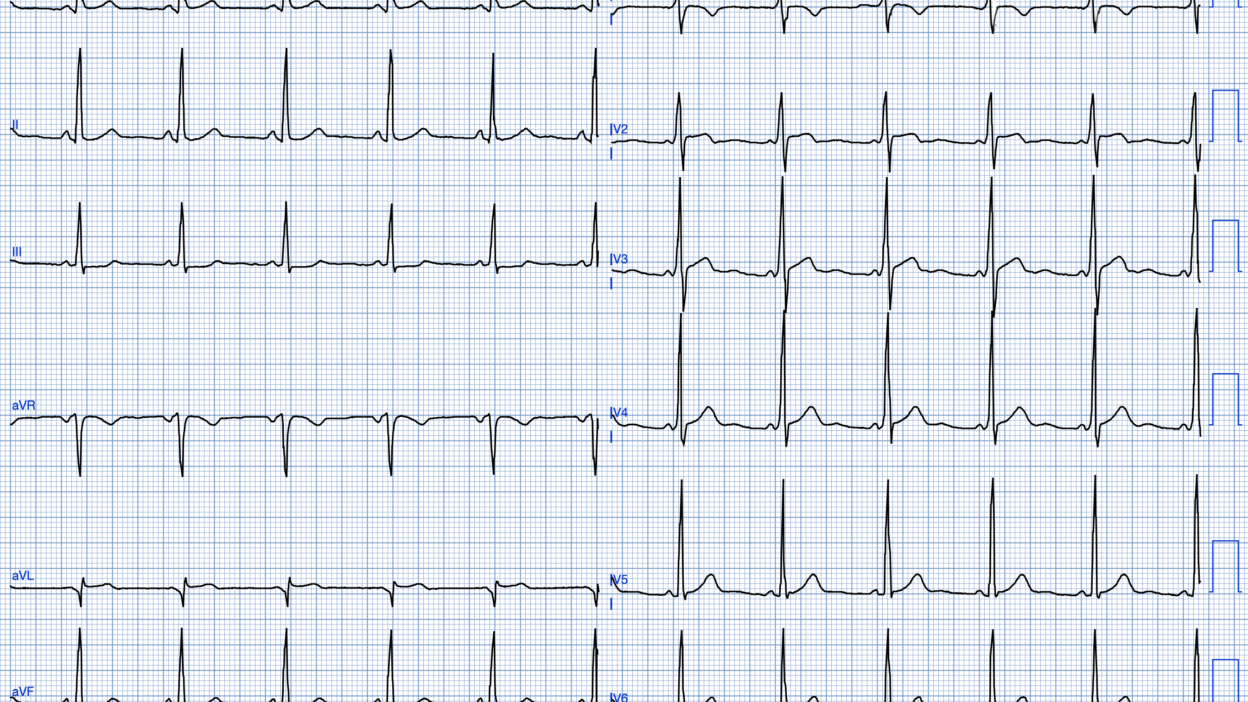
This post consists of 10 ECGs and different clinical scenarios. Your task is simple. Match the ECG to the clinical scenario or provided ECG description that you that you think fits BEST. The quiz is DIFFICULT and not aimed at beginners.
To ENLARGE the image on a computer: right click, then open in new tab.
To ENLARGE the image on a phone or tablet: stretch the image.
A comment on each ECG will be available when the Quiz is finished.
Good luck!
TAKE THE QUIZ= = =
= = = =
======================================
MY Comment, by KEN GRAUER, MD (1/12/2026):
Today’s post by Dr. Nossen features an ECG Quiz consisting of 10 tracings. This exercise is not easy — but instead, it challenges your understanding of what each tracing represents, as well as your ability to recognize the most likely clinical setting(s) in which you have seen (and will continue to see) ECGs with similar findings.
- There is no certification for completing today’s Quiz. Instead — you reap only the satisfaction of solving these 10 problem tracings.
- Our hope is that you find this Quiz both interesting and educational.
- Confession: I missed one of the questions = a reminder to me to remain systematic in my approach, and to never take anything for granted. How well did YOU do on today’s Quiz?
= = =
Assessing ECG Competency …
Working through today’s ECG Quiz by Dr. Nossen reminded me of the challenge inherent in attempts to assess ECG Competency. Many (most) followers of Dr. Smith’s ECG Blog have encountered this challenge either as a “test taker” or a “test maker”. Working through Dr. Nossen’s Quiz served to refocus my thoughts on my decades-long experience in this area. I’ll raise the following questions:
- Is assessment of the ECG interpretation ability of emergency providers needed?
- If so — How is this assessment best accomplished?
- And — Who should do this assessment?
- If so — How is this assessment best accomplished?
= = =
I’ll briefly reflect on the above questions . . .
- The need for assessment is obvious. Lives hang in the balance. Delay (or failure) to recognize acute coronary occlusion or the cause of a life-threatening arrhythmia has obvious consequences.
- Assessment is most often accomplished out of need. Someone in charge takes on the task of making up an ECG test — simply because there is no standardized assessment tool for those in practice, or for those being trained at a given location.
- Devising an optimal ECG assessment tool is no easy task. This is because the entity of “emergency providers” defies definition — as it includes physicians in multiple specialty fields, nurses, paramedics, and a variety of additional paramedical professionals — all with different experience levels (and different levels of expertise) — all practicing in different countries under different standards, with different needs — and realistically, without a true “gold standard” as to what is “optimal”.
- As one who frequently receives emails and messages from providers from all over the world — it has become apparent to me that the “tester” does not always know the correct answer. There is no universal gold standard for ECG interpretation (and no universal agreement on how to assess ECG competency).
BOTTOM Line: As has been true for the duration of my medical career — We learn from doing. We learn from each other. The best clinicians are those who are self-motivated to go back after a case is resolved to reflect if lessons were learned during our efforts to provide optimal care.
- This has always been our goal in this ECG Blog. We hope you continue to find our presentation of real cases useful and insightful.
- We hope you found today’s challenge by Dr. Nossen worthwhile.
= = =
= = =