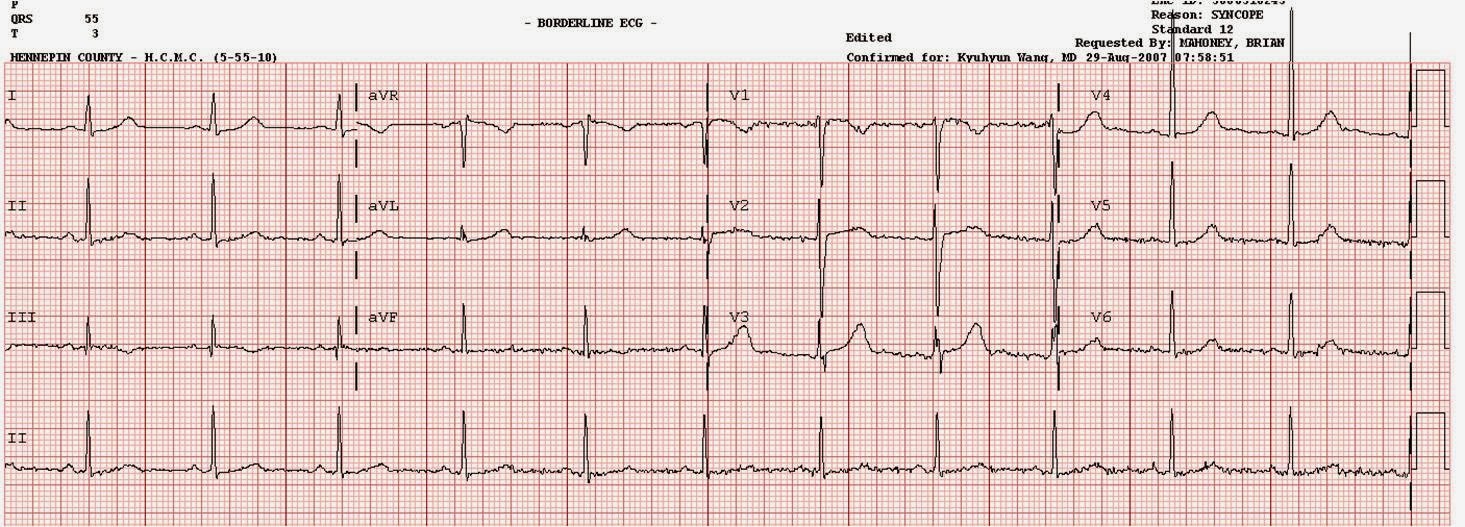
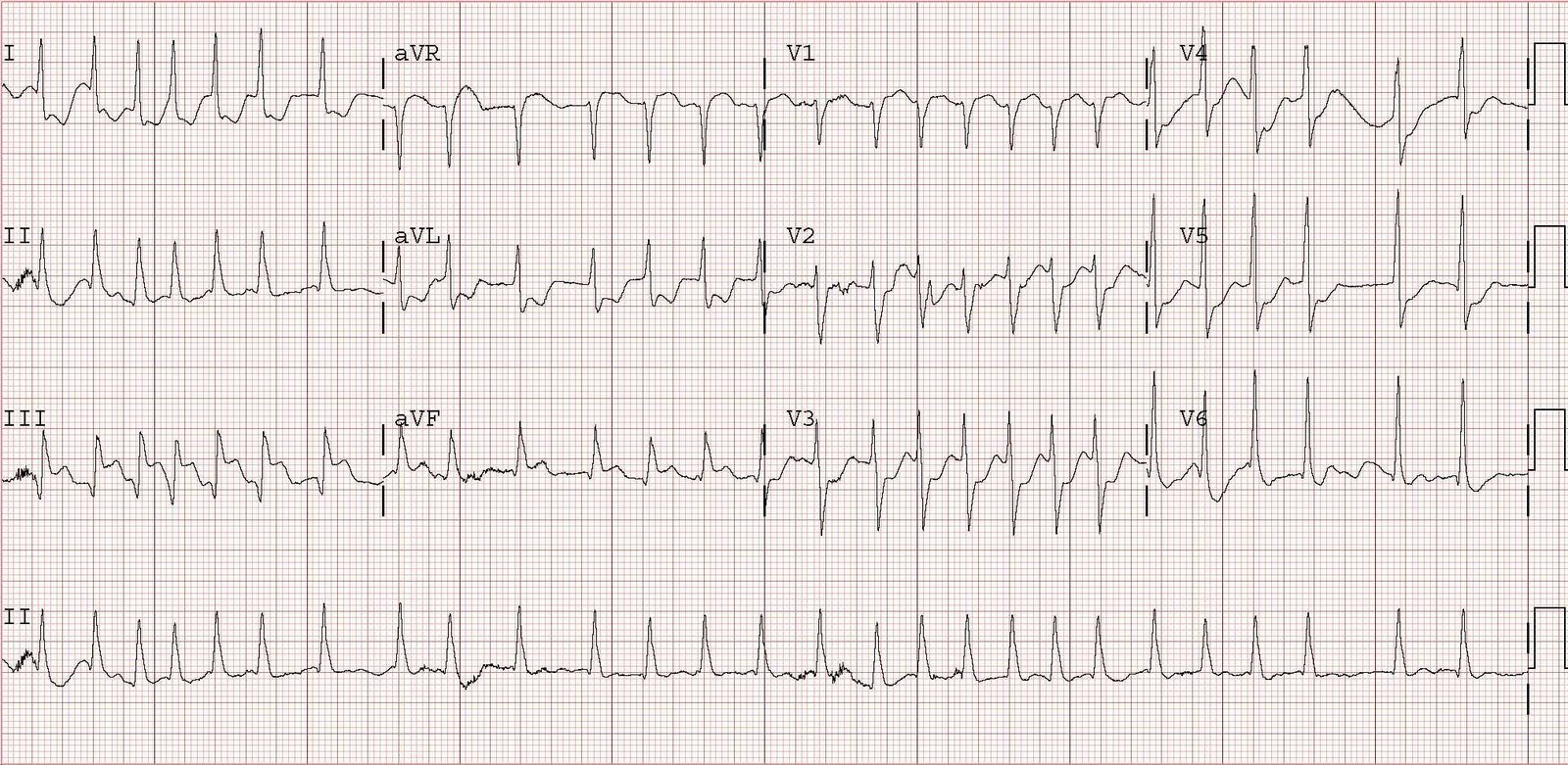
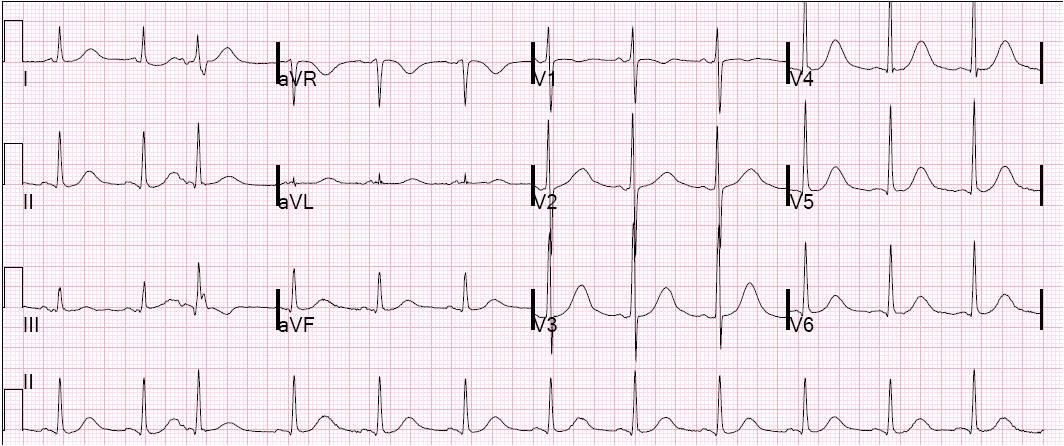
I published this case in Annals of EM 6 years ago. I figure it’s ok to put it here now after all these years, especially since one cannot even read an abstract of it. The reference is below, so as not to give away the diagnosis.
This 59 year old Hmong woman presented with palpitations, nausea, vomiting, weakness, and numbness. She had intended to take “Hmong Medicine number 9” but unwittingly took “Hmong medicine number 12.” When she realized her mistake, she knew that she would die, and her family called 911. Her BP was 65/40. Lungs were clear and exam was otherwise unremarkable.
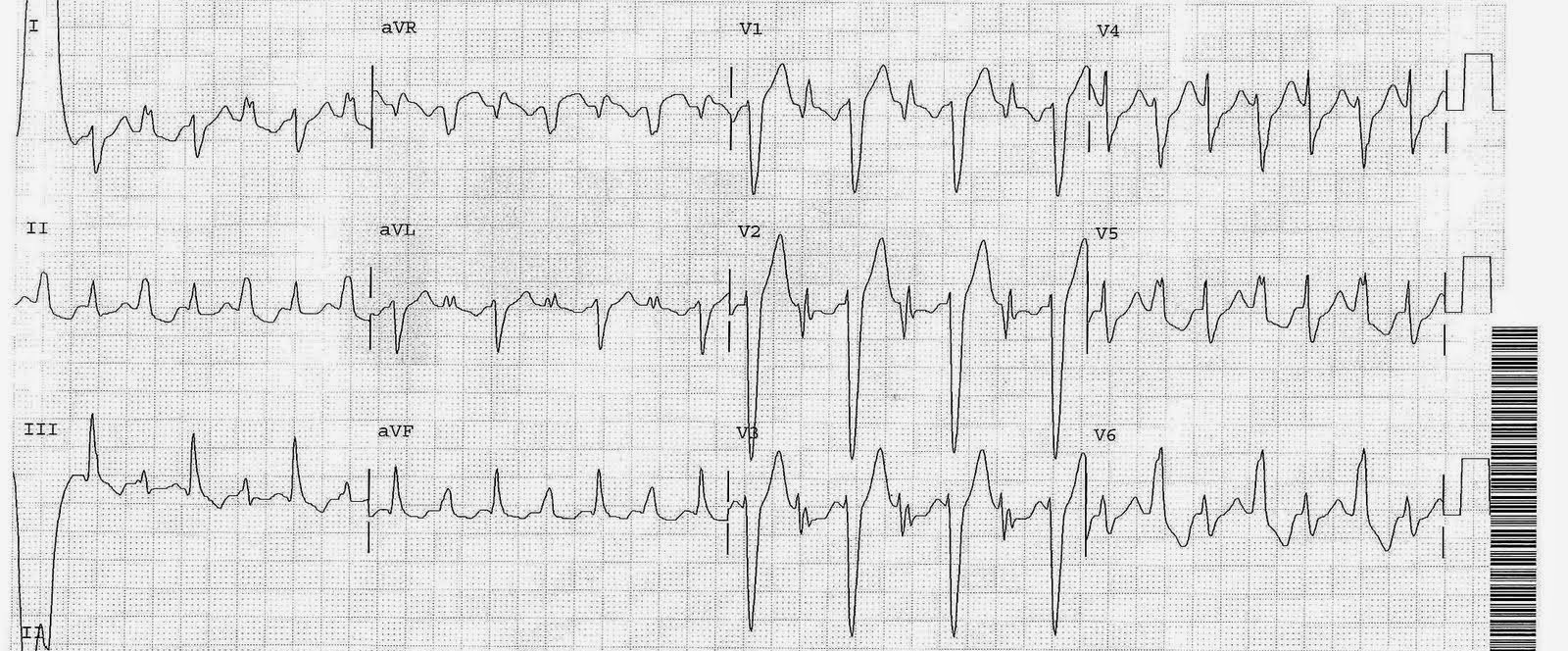
This was her initial 12-lead ECG:
The family showed EMS the herbal root from which the patient ate shavings:

What is the rhythm????
Answer: Bidirectional Ventricular Tachycardia. There are alternating ventricular beats; the frontal and transverse axes alternate because there is alternating right bundle and left bundle branch block morphologies. This is, of course, not because there is actually RBBB and LBBB, but because the origin of the ventricular beat alternates from right ventricle (LBBB) to left ventricle (RBBB).
We treated her with esmolol without any effect. No therapy helped her, but she did spontaneously convert to NSR 8 hours later. A Chinese PharmD and herbal specialist identified the root as aconitum Carmichaelii.
Bidirectional Tachycardia is rare, and usually associated with digitalis toxicity. It has been reported to be unresponsive to electrical cardioversion and lidocaine, but responsive to flecainide. Aconite (also known as monkshood, or wolfsbane) seems to trigger automaticity by direct activation of inward sodium channels during phase II of the cardiac action potential; thus, flecainide, which blocks these sodium channels appears to be effective in rats.
I had some great questions on this from Beth Bilden, toxicologist:
1. 1. In a patient with a wide comlex dysrhythmia accompanied by hypotension (both likely caused by the unidentified toxin), I would have been tempted to give sodium bicarb which probably would have made things worse. My answer: Although the QRS is wide, it is not wide because of delayed conduction; it is wide because of bundle branch blocks morphology which indicated a focus of dysrhythmia in the ventricle, not a delay in conduction. Therefore, bicarb would not be indicated and was not given. In fact, the best treatment for this (flecainide), when taken in overdose is reversed with sodium bicarb!
2.
2. Esmolol was used for rate control, right? If so, was a calcium channel blocker considered rather than a beta blocker since a sodium channel blocking toxin/toxicant would decrease inotropy and a sodium channel blocking agent had not been excluded from the differential? My answer:Again, I don’t think the ECG is consistent with a sodium channel blocking agent. I have to admit, I had no idea what the toxin was and thus what I should do, so I tried esmolol, knowing I could shut it off if it did not work. No one else knew what to do, so she was only observed overnight and (very luckily) survived. Obviously, if I saw a case of this now, I’d know the differential and have a much better idea how to treat it. As would all of you readers!
Here is another case of bidirectional tachycardia. And another.
Smith SW et al. Bidirectional Ventricular Tachycardia Resulting From Herbal Aconite Poisoning (Case Report). Annals of Emergency Medicine 2005; 45(1):100-101.