Dr. Smith's ECG Blog

Instructive ECGs in Emergency Medicine Clinical Content

Associate Editors:
— Pendell Meyers & Ken Grauer (2018)
— Jesse McLaren & Emre Aslanger (2022)
— Willy Frick (2024) — Sam Ghali (2025)

editors

Modified Sgarbossa Rule Published Online: Annals of Emergency Medicine

Link: Diagnosis of ST-Elevation Myocardial Infarction in the Presence of Left Bundle Branch Block With the ST-Elevation to S-Wave Ratio in a Modified Sgarbossa Rule

There are differences between previous posts and the findings in this paper.  

Previously, the best ratio was 0.20.  Due to slight differences in methodology, the final rule uses 0.25.  It is important to realized that the use of 0.20 will result in slightly higher sensitivity and lower specificity for STEMI. 

Also, I did not use the absolute value of the ratio.  Thus, whereas, before, excessive discordance was greater than 0.20, it is now less than -0.25 (less than a negative number).  This may be confusing, but was more accurate in terms of simple arithmetic (dividing a positive number by a negative one).

Thus, for the revised rule, the
third component of the rule [greater than or equal to 5 mm discordant ST
elevation in leads with a negative QRS (S-wave)] is replaced by a ratio
of ST elevation at the J-point, relative to the PR interval (a positive
number), divided by the preceding S-wave (a negative number, so the
result is a negative number) that is less than or equal to -0.25,
was far more sensitive and was more accurate than the Sgarbossa rule at
diagnosing coronary occlusion.  Additionally, the discordant ST
elevation must be at least 1 mm.  The criteria need to be met in only
one lead to be positive.

Furthermore, we found that a simple rule using only any excessive discordance (excessively discordant ST elevation or ST depression in just one lead, without paying attention to concordance), with a ratio less than or equal to -0.30, was the most sensitive (100%), with excellent specificity (88%) and the best accuracy.

Both rules need validation in another study.  We are working on that.

The full text is not free now; I’m not sure if it will be when published in print.

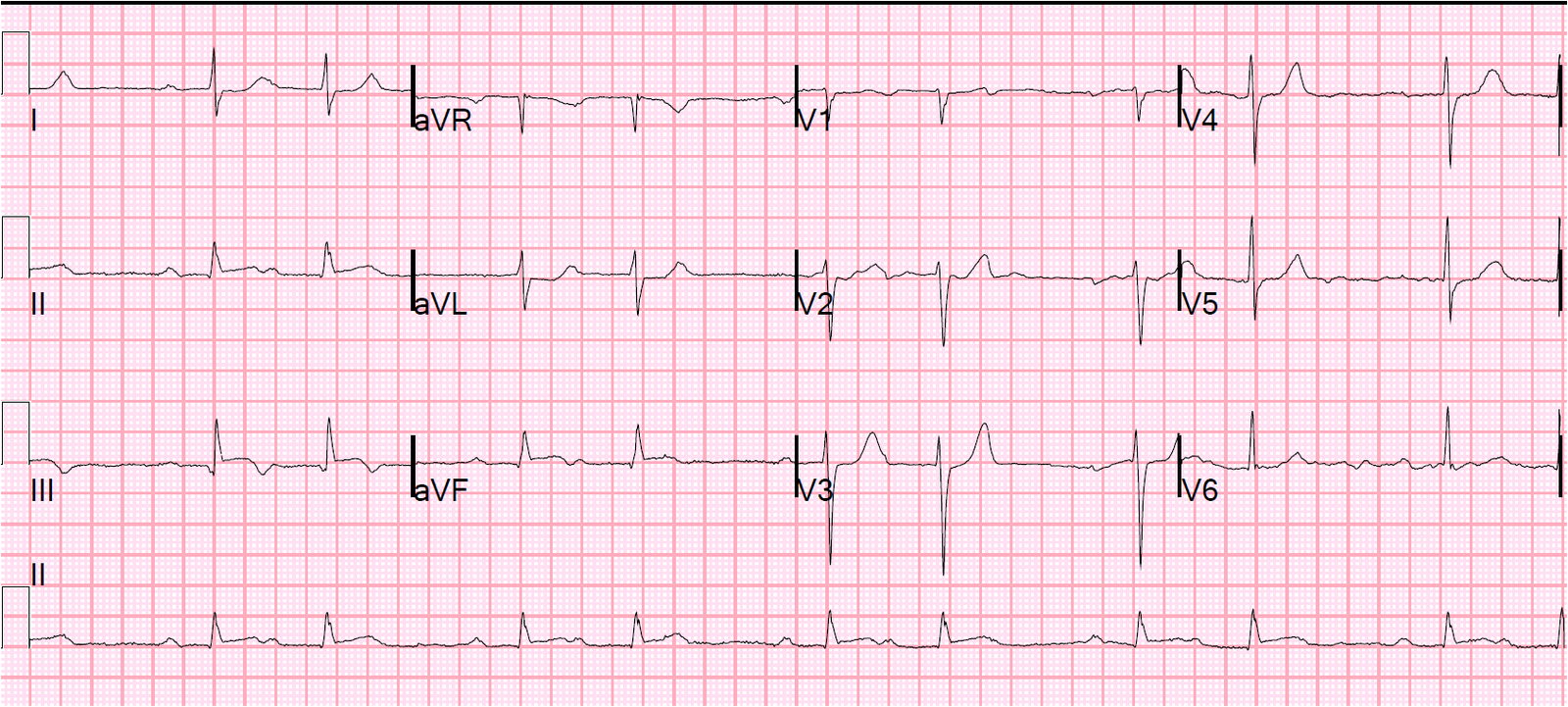
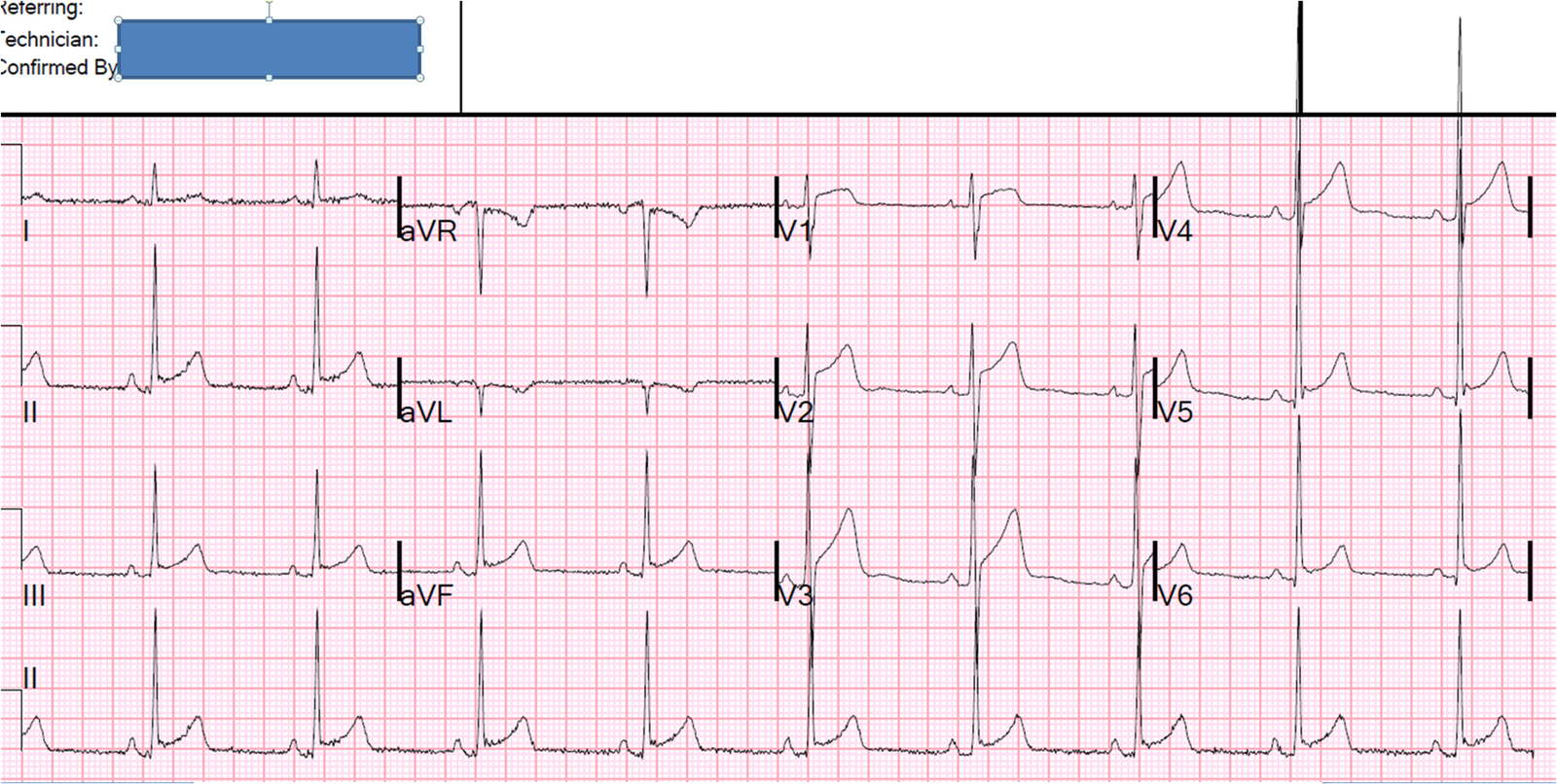
Here are some example cases.

Previous Article

Angiography can have bleeding complications - be more sure of your STEMI diagnosis in high risk patients

Next Article

Male in his 40's with chest pressure: what is the diagnosis