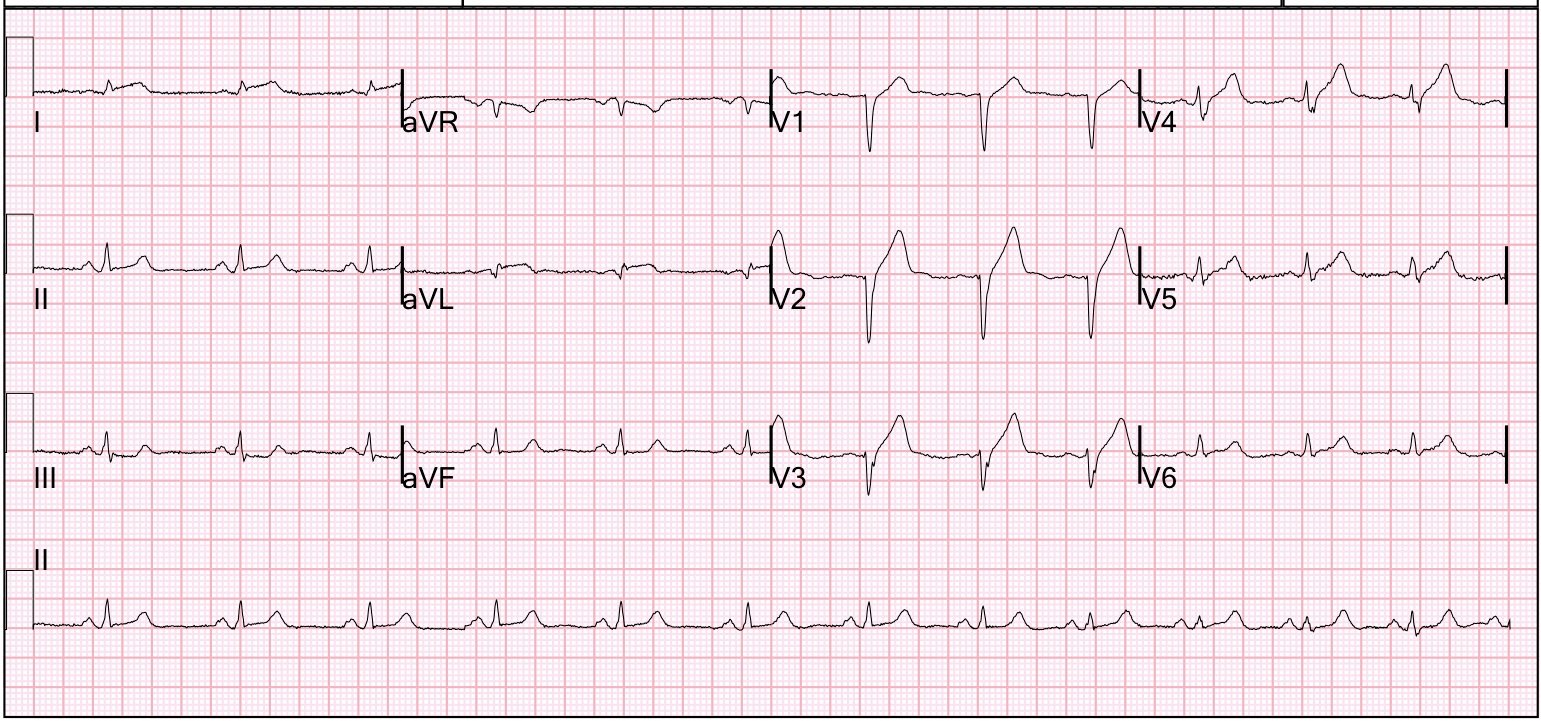
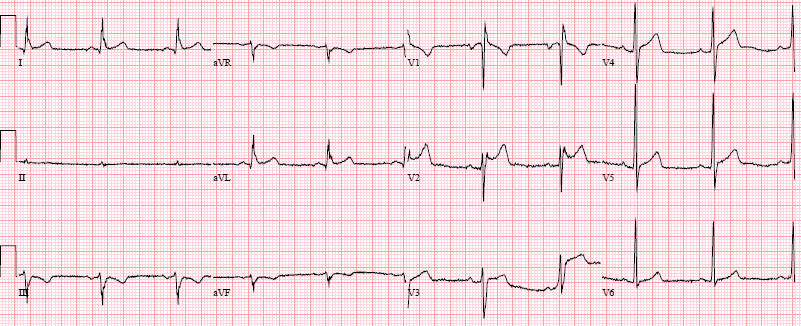
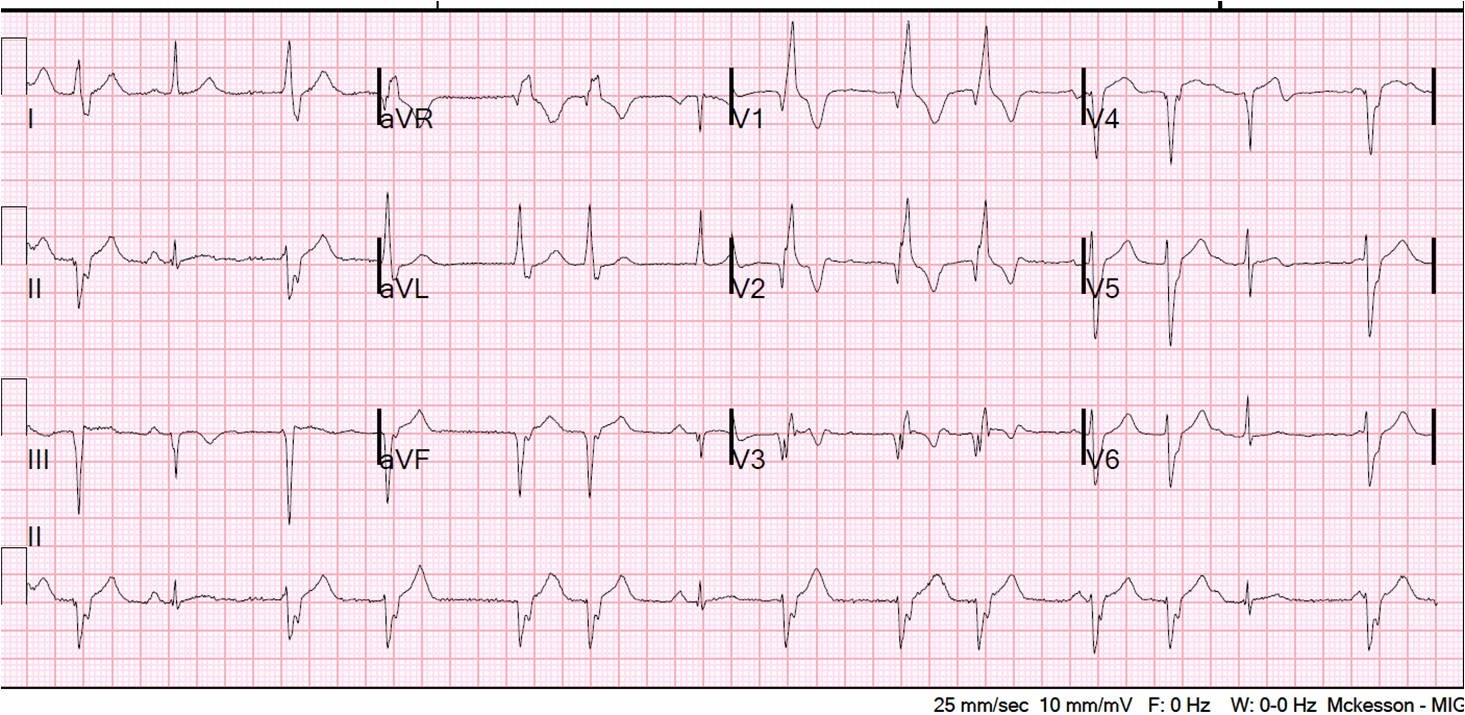
Inferior STEMI may be due to RCA or circumflex occlusion (and occasionally due to a “Type III” or “wraparound” LAD, with concomitant anterior MI). If inferior STEMI is due to RCA occlusion, then the right ventricle may be involved, and a right sided ECG is indicated. If due to circumflex, then one need not worry about RV MI. In addition, the interventionalists like to know which artery is involved before the angiogram, if possible.
Here is the ECG of a previously healthy 35 year old male with one hour of chest pain:
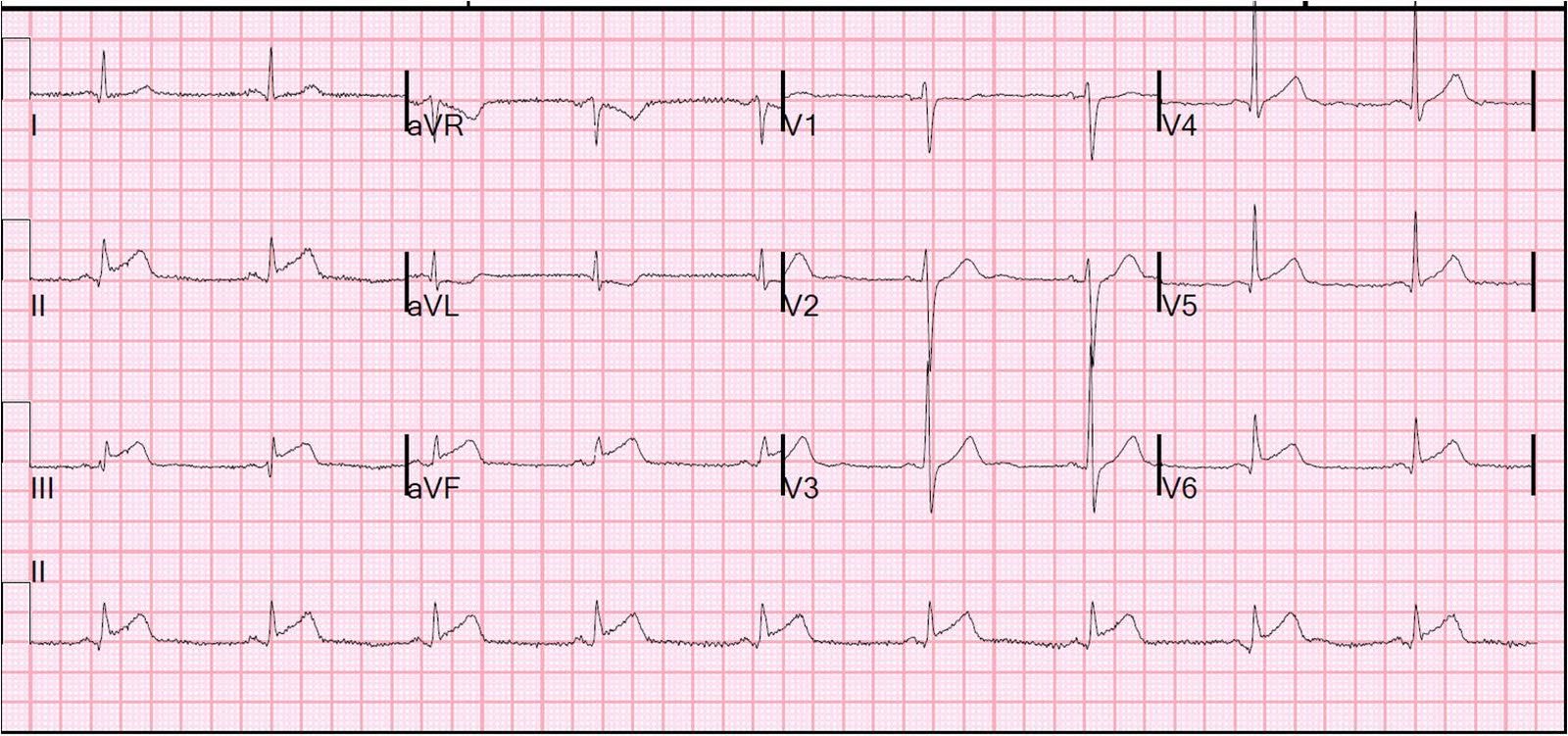
There is obviously an inferior STEMI.
Notice:
1. There is no reciprocal ST depression in lead I
2. There is ST elevation in leads V5 and V6.
3. ST elevation in lead II is at least as high as that in lead III
These are 3 criteria which are highly correlated with circumflex occlusion.
Kontos MC et al. Am J Cardiol 1997;79:182
Chia BL et al. Am J Cardiol 2000;86:341
Bairey CN et al. Am J Cardiol 1987;60:456
DeVerna et al. (including Kurz MC and Smith SW) has more recently developed a decision rule (see diagram), presented at ACEP Research Forum in 2008 [DeVerna CJ et al. Ann Emerg Med2008;52(4 Suppl):S117.]. We are in the process of validating this tool. A score greater than or equal to 5 diagnosed circumflex occlusion with very high specificity.
.